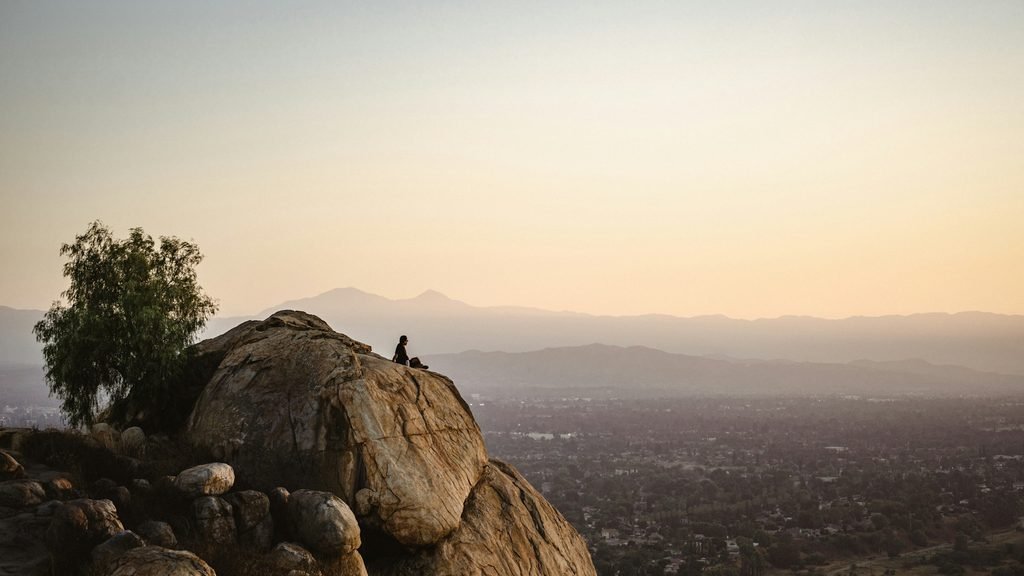
The land is the reason you’re looking at Norco. It’s also the only part of the purchase nobody puts in the listing photos.
I just made a video about what it’s really like to live here, and the piece people kept asking about afterward wasn’t the horses or the trails. It was the lot. Specifically: what does it take to own one?
A half acre is 21,780 square feet. If you’re coming from a standard tract neighborhood, that is your entire old property several times over, and it is now entirely your responsibility. The fun version of that sentence is “blank canvas.” The honest version is “there is no HOA gardener coming.”
Here’s the deal. More land really does mean more freedom. It also means more water, more equipment, more weekends, and more decisions. Knowing that before you write an offer is the difference between loving your property and quietly resenting it.
Why do weeds surprise almost everyone?
Because bare land is not maintenance-free land. It’s the opposite.
Open dirt in this climate doesn’t stay open dirt. It fills in, fast, especially after any rain, and by the time you notice it from the kitchen window it’s already a weekend project instead of an afternoon one. Tumbleweeds are their own seasonal event out here.
Norco takes this seriously enough to put it on a calendar. The city’s fire department inspects vacant lots twice a year, tumbleweeds in the fall and weeds in the spring, and owners on the department’s vacant parcel list receive a written deadline to clear them. Miss the deadline and there’s a $250 non-compliance fine, plus the city can send its own contractor and assess the cost against the property.
That program is aimed at vacant parcels, not every backyard in town. But it tells you something useful about where you’re buying: the city considers uncontrolled vegetation a fire hazard worth enforcing. If you own an acre with a back half you rarely walk, that back half is still yours to manage.
Budget for it in time or budget for it in money. Most large-lot owners eventually do both.
Is a big lot the same as a usable lot?
No. This is the point I’d flag hardest to anyone shopping here right now.
Pay attention to how Norco listings are written. You’ll see “flat usable” square footage called out over and over, separately from total lot size. That language exists because the distinction matters enormously and buyers keep learning it the expensive way.
Slopes, drainage swales, erosion along a back bank, old hardscape, mature trees, a corner you can’t get a truck or a trailer into: all of it counts toward acreage and none of it counts toward what you can actually do. A 1.25-acre parcel with a steep rear third and a drainage issue can be less functional than a flat 20,000-square-foot lot.
Norco’s code even puts a number on it. Under the animal-keeping overlay standards, you need a minimum of 500 square feet of flat usable area for each adult animal unit. Animals also have to be kept at least 35 feet from a neighboring residence unless a solid fence of at least six feet separates them. So if you’re buying with horses in mind, “how big is the lot” is the wrong question. “How much of it is flat, accessible, and correctly set back” is the right one.
Walk the whole property before you write the offer. All of it, including the part with the weeds. Bring someone who can tell you what grading, drainage, or access work would cost, because that number belongs in your purchase math, not your someday list.
What does landscaping half an acre actually cost?
A blank canvas is genuinely exciting. It is also the single fastest way to blow through a budget.
The mistake is scaling up a plan that was designed for a small yard. Materials, plants, labor, and irrigation don’t get cheaper by the square foot when you buy more of them. A design that would fully finish a compact tract yard will cover a noticeable fraction of a half acre and stop.
Three things to price out before you commit to a vision:
- Irrigation. Decide early whether you’re installing a real system with zones and a controller, or hand-watering, or leaving sections unplanted on purpose. Retrofitting irrigation into finished landscaping later costs more than doing it first.
- Plant selection. Water-wise and native plants aren’t just an environmental preference at this scale, they’re a monthly bill. Norco buys most of its water through Western Municipal Water District, which is a Metropolitan Water District member agency, so SoCal Water$mart rebates reach you here. The current residential turf replacement rebate is $2 per square foot, up to 5,000 square feet converted per year. One catch worth knowing: you must apply and get a reservation of funds before you remove any turf. Start the project first and you’re not eligible.
- Phasing. Nobody finishes half an acre in one pass. Decide what gets done in year one, what waits, and what stays intentionally unimproved until you know how you actually use the space.
The takeaway: think of your lot as three or four projects with their own timelines, not one big landscaping job.
What happens when the property has to run without you?
This is the question that separates people who love their land from people who feel trapped by it.
A two-week trip is simple when you’ve got a small yard and a neighbor with a key. On acreage it’s a plan. Irrigation timers have to actually work. Somebody has to notice a broken line before a section of new plantings dies. If you have animals, somebody has to be there daily, and that person needs to know what they’re doing.
Waste is part of that plan too. If you keep livestock in Norco, manure collection isn’t a lifestyle choice, it’s in the municipal code. Owners who keep livestock are required to participate in the franchise hauler’s manure service, and non-participation is subject to administrative citation. Current cost is about $31.49 a month for weekly cart service.
None of this is a dealbreaker. It’s just a system, and systems have to be built before you need them.
Why does every project suddenly get bigger?
Fence math is the clearest example. Replacing 20 feet of fence is a Saturday and a modest invoice. Replacing 100 or 200 feet of fence is a bid, a permit conversation, and a real number. Same job. Different property.
It runs through everything. Trimming, hauling, gravel, grading, lighting, pest control, tree work. The unit cost is normal. The quantity is not.
Then there’s equipment. A push mower doesn’t cut it on acreage, so a riding mower enters the conversation, and behind it a trailer, a place to store all of it, and a maintenance schedule for the equipment itself. Owning land quietly makes you the owner of the tools that maintain the land.
The overwhelm doesn’t come from any single project. It comes from four of them showing up in the same month.
So should you buy the big lot?
Here’s the reframe I’d give any buyer looking at Norco right now.
Don’t just ask whether you can afford the house. With Norco’s median sale price sitting around $975,000 as of this spring, that question is already front of mind, and it’s the easy one.
Ask whether you want the responsibility that comes with the land. Ask whether you’re genuinely excited about what you could build out there, or whether you just like how it looks on a Sunday afternoon showing.
Because more land does mean more work. It also means more freedom, more possibilities, and more of the life you pictured when you decided you wanted room to breathe. The people who thrive here aren’t the ones who underestimated the work. They’re the ones who saw it clearly and wanted it anyway.
If you’re weighing a large lot in Norco and you want a straight answer on what a specific property would really take, reach out. I’ll walk it with you and tell you what I see, including the parts that don’t photograph well.
And if you know someone who’s been dreaming about a half acre, send this their way before they make an offer.